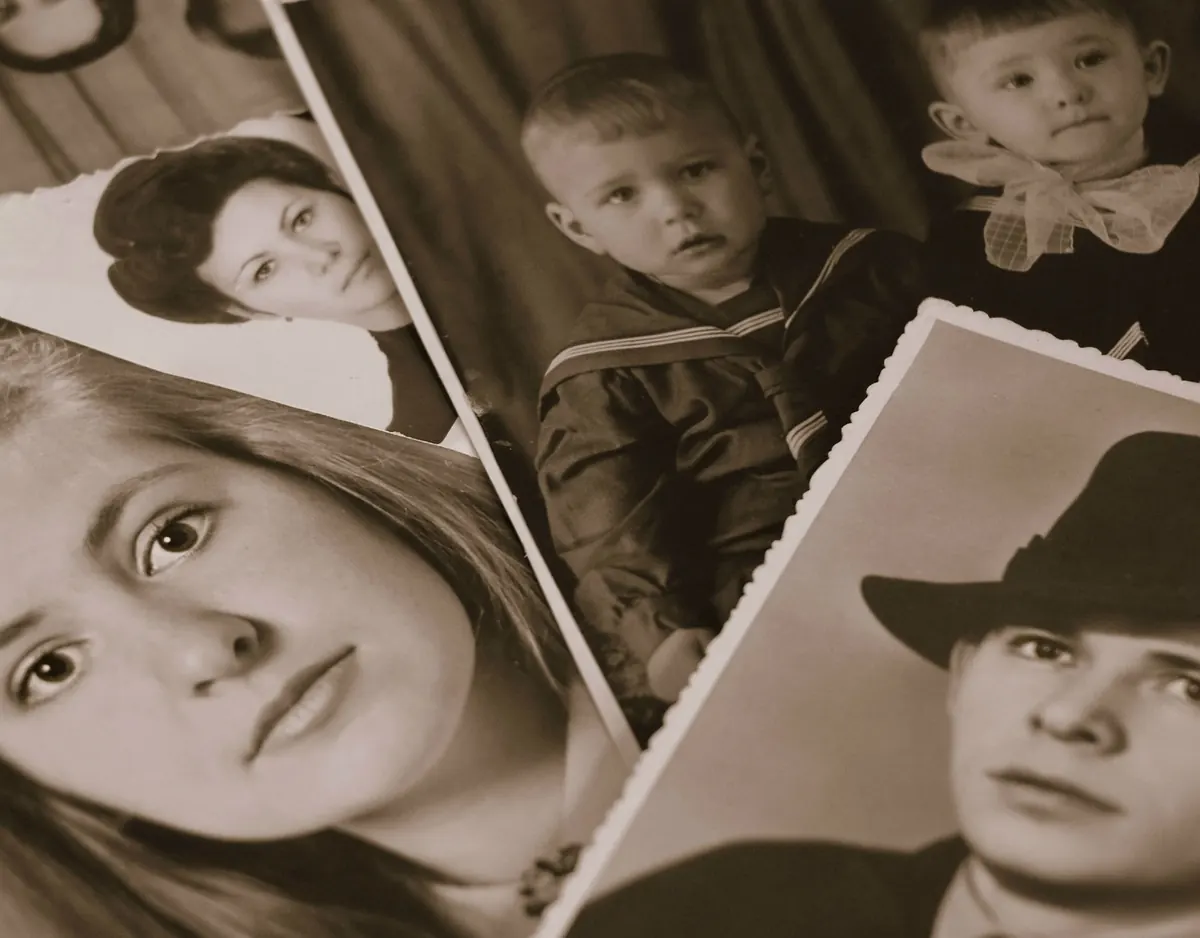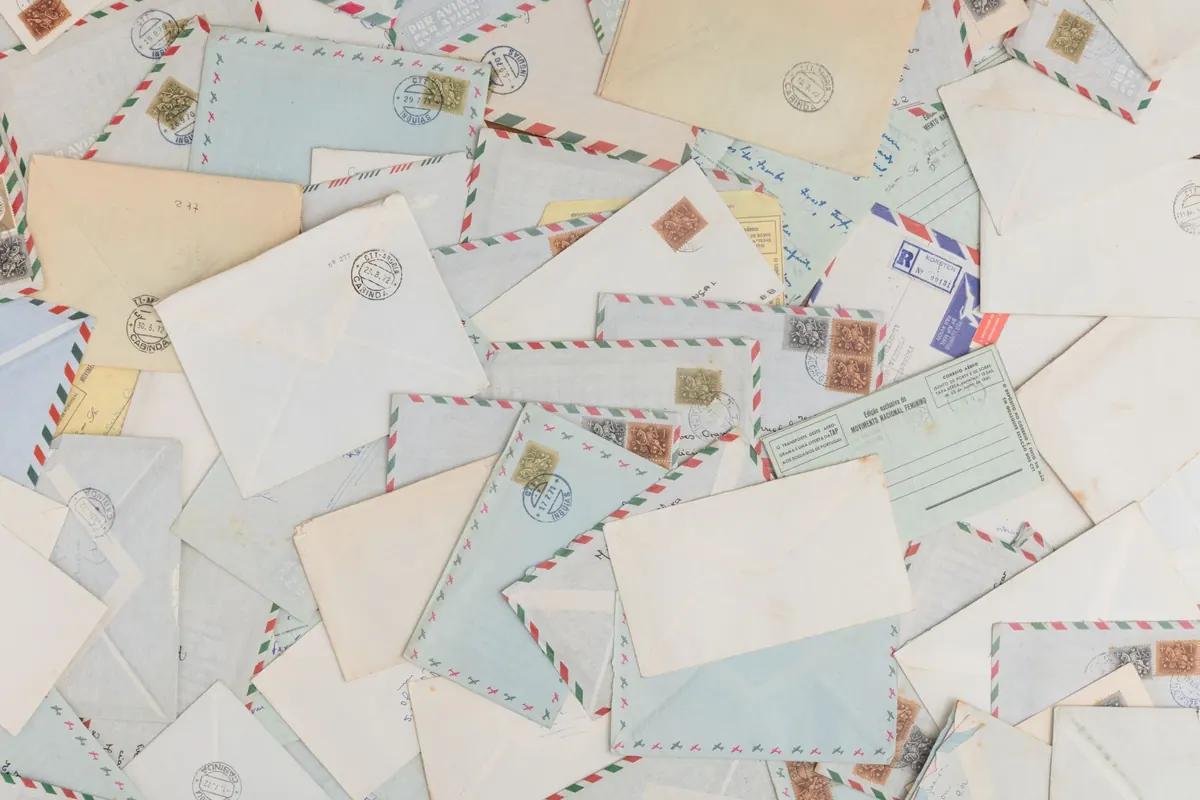
The shoebox has been on the top shelf for years. Perhaps it is a real shoebox, gone soft at the corners, or a biscuit tin, or three plastic bags knotted together at the handles. Inside: envelopes with foreign stamps, postcards of fountains, letters in a hand you half recognise, a few photographs that ended up in the wrong place entirely. You have promised yourself you would deal with it. The good news is that it does not need a month of evenings. It needs a table, a pencil, a few folders, and a method that keeps you from reading item four for forty minutes.
Empty the box once, and write down what you find
Clear a table and cover it with a clean white cloth or plain paper. White matters: it makes small things visible, and it gives you a neutral background if you photograph anything later. Tip the box out in one go rather than reaching in and pulling things out at random.
Before you move a single letter, note how the contents were arranged. Three bundles tied with string, a rubber band around a wad of postcards, a group still in their envelopes with the addresses facing out — all of that is information. A bundle usually means these were kept together for a reason, often a single correspondent or a single year. Slip a paper note under each bundle and describe it in pencil.
Then make the small repairs. Remove rubber bands, which perish and fuse to paper; remove steel paperclips and staples, which rust and leave a brown shadow. Keep the string or ribbon if it moves you, but store it loose. Brush off loose dust with a soft brush, and wash and dry your hands before handling anything. If some items are damp, musty or spotted, separate them at once, let them dry in a room with moving air, and take advice from a paper conservator before returning them to the box. Mould spreads, and a shoebox is an ideal place for it to spread.
Three passes, not one
Sorting goes wrong when you try to answer every question at once. Give each pass a single question and resist the rest.
- By format. Letters still in their envelopes; letters without envelopes; postcards; photographs; official papers such as certificates, receipts and telegrams; empty envelopes worth keeping for their stamps and postmarks. Nothing more than this on the first pass.
- By person or household. Within each format, group by correspondent or sender. Nonna Ada, Uncle Pietro in Buenos Aires, the Milan cousins, the neighbour whose name nobody remembers. Rough groups are fine; you will refine them later.
- By time. Inside each group, put things in order, earliest first. Where there is no date, estimate one and mark it in pencil on a slip beside the item.
Work in sittings of about forty minutes and stop while you still know where you are. Photograph the table between sittings, or stack each group in its own paper folder, so that a week away does not undo the work. If children or cats share the house, put everything back in the box at the end of each session — sorted, but back in the box — rather than leaving it open overnight.
Identify people before you identify places
More letters can be attributed without opening them than you would expect. Start with the envelope: the full name of the addressee, the return address on the flap, the postmark, the stamp. A postmark is a small gift, usually a town and a date, and often there is a second, fainter one on the back.
Then look at the hand. Signatures are the easiest place to begin, but the shape of a capital letter or the way someone writes the number seven will carry across decades. Comparing an undated letter with a dated one from the same person is quicker than squinting at it alone.
Mark on slips, not on the letters
Write attributions on a separate slip of paper and keep it with the item in its folder. If you really must mark the item itself, use a soft pencil, lightly, in a corner, and only on plain paper you are confident is not coated or fragile. No ink, no marker, no sticky notes pressed onto the surface for years, and never anything on the picture side of a postcard.
Ask while there is still someone to ask
The people who can put a name to a face or explain why "Cesco" was not on speaking terms with "Dario" will not always be there. Sit down with an older relative and a folder of photographs, not the whole box, and take notes. Where nobody is left, look for corroboration inside the correspondence: a line reading "as I told Aunt Rosa" identifies two people at once.
Date what has no date
Few letters are truly undatable. Postmarks help, and so do stamps, whose designs and currency will at least place a decade. Postcards often carry a publisher's number and a caption in a style you can compare with dated examples. Look at the content: a reference to a wedding, a move, a flood, a new job, a child's name that appears in another letter.
Small physical clues add up. Typewritten letters sit in a different period from fountain pen on airmail paper. A telephone number with four digits, a street address that predates a rename, a price quoted in old currency — each narrows the range. Write "c. 1958" in pencil on your slip when you are estimating, and never present a guess as a fact in the notes you pass on.
Scan in batches and name as you go
Scanning is the part people abandon halfway, usually because they began with no naming system. Decide the system before the first file.
- Use a flatbed scanner where you can, at 600 dpi for postcards and small photographs, and around 300 to 400 dpi for ordinary letters. Save as TIFF if you have the space, otherwise a high-quality JPEG.
- Scan both sides. The back of a postcard carries the message; the back of an envelope carries the postmark.
- Name every file the same way: year-month-day, surname, first name, place, then a sequence number. Something like 1963-06-12_Rossi_Ada_Trieste_003.
- Keep one working copy on the computer, one copy on an external drive, and one somewhere else entirely, whether a cloud account or a folder handed to a relative.
- Do fifteen or twenty items in a sitting, not two hundred. Then stop.
Scanning does not replace the originals. Keep the paper; a digital file is a copy, not a substitute, and the object itself holds information a scan flattens out.
Store the keepers so the box does not undo your work
Once sorted, letters want three things: a stable, dry, dark place; folders that will not damage them; and nothing stuck to them. Acid-free paper folders and archive boxes are inexpensive and widely sold. Avoid ordinary cardboard, PVC plastic sleeves, self-adhesive laminating sheets, sticky tape and glue, all of which cause damage over years rather than immediately.
Store folders upright rather than under a heavy stack, and avoid attics, garages and damp cellars; a cupboard inside the house is better than any of them. Handle items by the edges, and keep food and drink away from the table. If a letter is torn, leave it alone unless you can consult a conservator — a well-meant repair with tape is usually worse than the tear.
The box you can open again
Finish by doing two small things. Write a one-page index of what the box now contains — which folders, which years, which people — and put it on top inside the lid. Then choose the next step: a family lunch where you bring the photographs, or an evening scanning the Trieste letters from 1963.
A sorted box stops being a reproach on a shelf and becomes something you can actually open. It does not need to be finished to be useful. Three passes and a pencil will take you further in one afternoon than another five years of good intentions.
Photo: craveiro_ pics / Pexels